
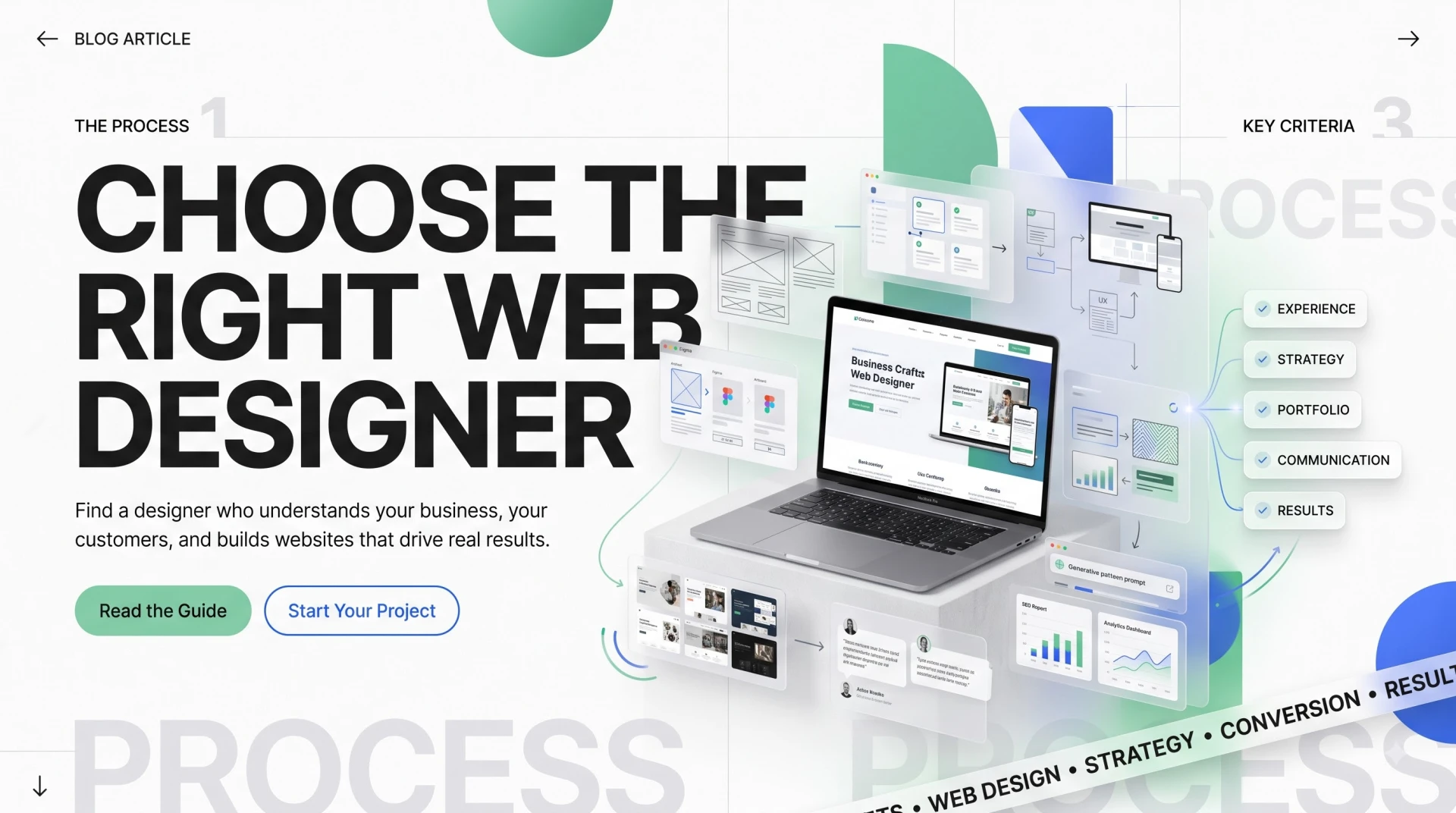
Choosing a web designer feels simple until you actually do it. There are thousands of options, from five hundred rupee freelancers to premium agencies, and every single one of them will tell you they can build you a great website. So how do you actually decide.
I run Llamacorp, an AI first web design and development agency, and before that I spent a year at Hegxcorp working across game development and MERN stack web projects. In that time I learned something most developers never fully get taught, which is that building a website and building a business asset are two completely different things. Here is what I think you actually need to know before you hire anyone.
Start with your needs, not their portfolio
The biggest mistake I see is business owners falling for whoever has the flashiest demo reel or the cheapest quote, without first asking what their own business actually requires. A restaurant needs something completely different from a SaaS product, which needs something completely different from an event organizer running paid ads. Before you even start looking at designers, get clear on what your website needs to do for your customers. Everything else follows from that.
Case study: the casino client
One of the more interesting projects I worked on involved a casino client. In India, you legally cannot promote casinos or casino games directly. So instead of hitting a wall, we repositioned the entire campaign around education, essentially framing the content around the idea that casino gaming can be a legitimate form of entertainment, rather than directly advertising gameplay. We ran campaigns with that angle and it worked. We captured a real audience of Indian casino players, specifically people who play on weekends, because the messaging was crafted carefully enough that the audience understood exactly what was being offered without us crossing a legal line.
The lesson here is that a good web designer is not just someone who makes things look nice. They are someone who can solve a genuinely hard positioning problem when the obvious approach is not even legally available to you.
Cheap and fast usually costs you more
In India especially, a lot of businesses default to hiring the cheapest freelancer available, someone doing a full website for a few hundred rupees. I understand the appeal, but here is the problem. A generic freelancer will often hand you a generic landing page and call it done. A professional designer does something different. They think about your actual customer, how that customer moves through your site, what makes them pause, what makes them decide to buy. That loop, from attention to interest to action, is the entire point of the website. A cheap template does not build that loop. A professional designer does.
What to actually look at in a portfolio
Do not just scroll through pretty screenshots. Look at testimonials. Look at what problems those past projects actually solved and whether that designer delivered a measurable result. For example, I built a landing page for a Dubai based event organizer who was running paid ads and needed a page that could actually convert that traffic. I approached it the way Duolingo approaches their landing pages, not overly animated, not flashy for the sake of it, but obsessively focused on the small details, whether the user finds it easy to navigate, whether the flow feels natural. That is what you should be looking for in a portfolio, not just visual polish, but evidence that the designer understands user behavior.
Questions to ask before you hire anyone
Ask directly whether they have experience in your specific industry or niche. A designer who has built ten restaurant sites will understand different psychology than one who has only built SaaS dashboards. Fit matters more than a generic list of skills.
Red flags to walk away from
Two things I would personally watch for. First, hiring someone who is still learning on the job, a student or a raw beginner, when your business is genuinely riding on this website. Your business is too important to be someone else's practice project. Second, watch for designers who keep changing direction, constantly pushing new fancy features or trends onto you without listening to what you actually asked for. A good designer challenges your ideas when needed, but they should not be reinventing your brief every week just to experiment.
If your budget is tight
Not every business can afford a full agency. If your budget is limited, look for an experienced freelancer who specifically understands your industry, rather than the cheapest option available. Just go in with clear eyes. Freelancers work on their own schedules, not yours, so you become the connective tissue between them and the rest of your team. Budget for that coordination effort, not just the invoice.
Where things are heading with AI
Most businesses still default to WordPress templates because they know they need to rank on Google and WordPress feels like the safe, proven choice. But on the design side, AI has changed what is possible. We can now build fast, animated, even three dimensional web experiences that would have taken weeks before. Here is the catch though. AI does not know your business. If you just tell it to build a website, you get something generic. The value a real designer brings now is knowing exactly what needs to go into your testimonials section, your services section, how those pieces should work together, and then directing the AI to build that specific vision. AI is a tool that speeds up execution. It does not replace understanding your customer.
The bottom line
Choosing a web designer is not about finding the person with the best looking website in their portfolio. It is about finding someone who takes the time to understand your business, your customer, and your constraints, whether those constraints are legal, budgetary, or purely competitive, and who can translate that understanding into something that actually converts. That is the difference between a website and a business asset.
Also Read: How Much Does a Business Website Cost in 2026? A Real Pricing Guide
 Start a project