
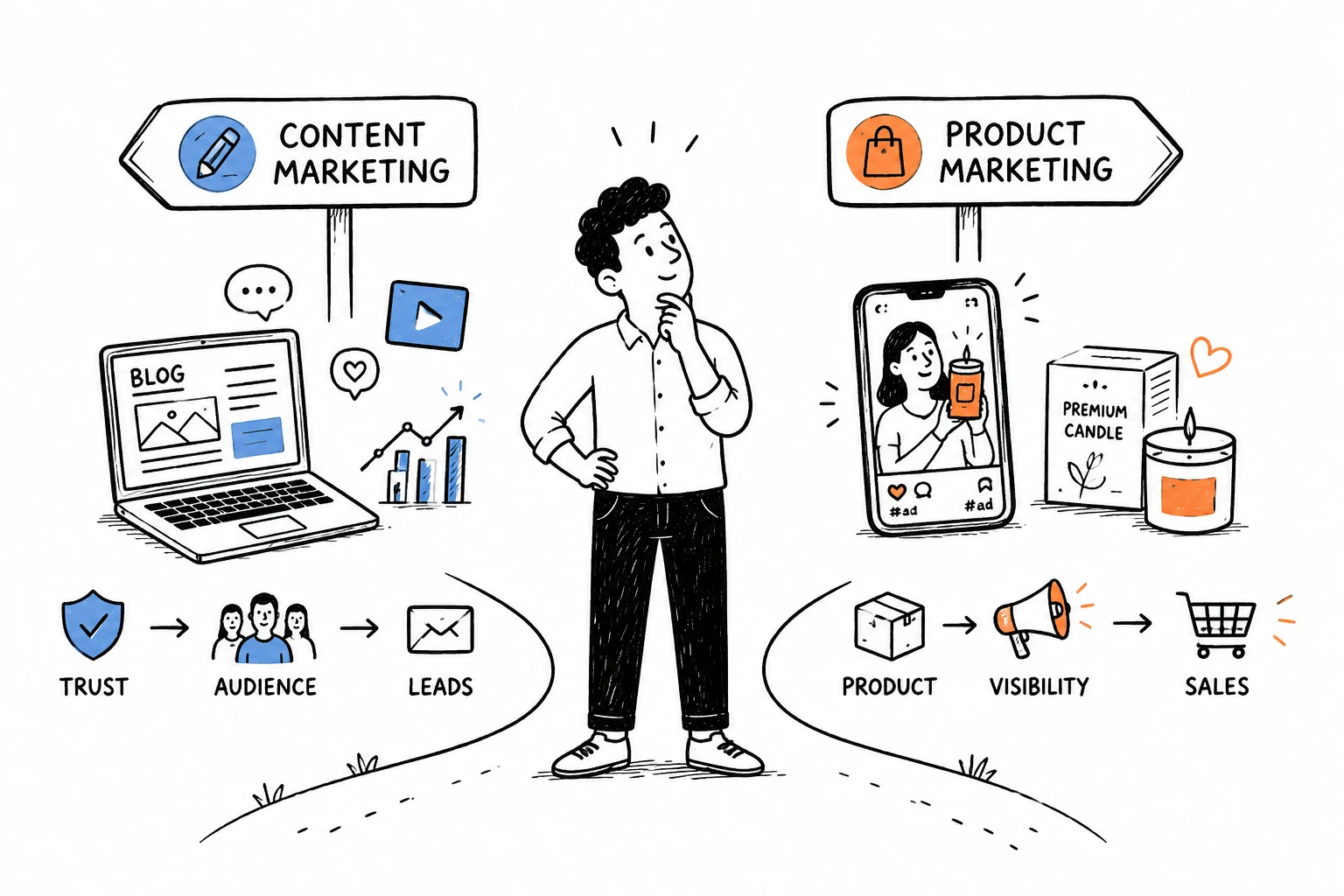
Every business owner eventually asks the same question. Should I be putting my energy into content marketing or product marketing. The honest answer is that it depends entirely on what you're selling, and getting this wrong can waste months of effort. I run Llamacorp, and here is how I actually think about this with real clients, including the mistakes we made along the way.
The simple way to decide
When a business comes to us confused about which direction to take, the first thing we look at is what they're actually selling. If it's a physical product, candles, apparel, anything tangible, we lean toward product marketing, using approaches like influencer partnerships to get the product directly in front of buyers and show them why it's good. If it's a service, especially something intangible like a trading platform, we lean toward content marketing first. The reasoning is simple. When you're selling a service, people need to understand what you actually do and build some trust in you before they'll pay for it. You cannot skip that step.
Case study: the trading platform
One of our clients ran a trading platform, and trust was the entire battle here, because people are naturally skeptical of anything that touches their money. We started small, working with a grassroots community of individual traders, encouraging their existing followers to just try the platform. That built a real, organic base of engaged users. Once that foundation existed, we moved to bigger content creators who could pitch the platform to their much larger audiences. Because the trust groundwork was already laid, those bigger partnerships actually converted. The result was a genuine spike, more sign ups, more registrations, real trading activity on the platform. The lesson is that trust has to be earned in layers. You cannot jump straight to scale with something people are naturally wary of.
Case study: the candle brand
On the product marketing side, we're currently running a candle brand's marketing. We started by showing the actual making of the candles on social media, differentiating for different occasions and everyday use, then moved into home decor influencer partnerships and user generated content. Here's the honest part. It hasn't produced the volume of buyers we hoped for, largely because candles are a genuinely niche product in the Indian market. We're still working to find and reach the right audience. I think it's important to say this plainly, because product marketing does not always work just because you follow the right playbook. Sometimes the ceiling is the market itself, and you have to keep iterating.
The biggest misconception about content marketing
A lot of business owners assume they can skip actually showing up themselves and rely entirely on generic AI generated videos instead. I've seen this firsthand. It rarely works. Content that feels genuinely human, a real person telling their story and showing their expertise, performs far better and gets picked up by social algorithms in a way generic AI content usually does not. If you're shy about being on camera, that's a real obstacle you need to solve, not skip past.
The biggest mistake in product marketing
The most common mistake is only showing the polished, benefit heavy side of the product, hammering the same claims over and over. What tends to work better, especially in the Indian market right now, is casual, usage focused content that shows the product actually being used in everyday life, rather than a hard sell repeated endlessly.
How to measure each one
These two approaches need completely different scorecards. For content marketing, watch attention, whether people are actually spending time with your content and listening to what you're saying. Sales will come, but you need patience, realistically six to eight months before you see a real structural payoff. For product marketing, the metric is more direct: are you seeing actual sales after the campaign goes live. Trying to judge content marketing by immediate sales numbers is the fastest way to kill a strategy that just needed more time.
A lesson learned the hard way
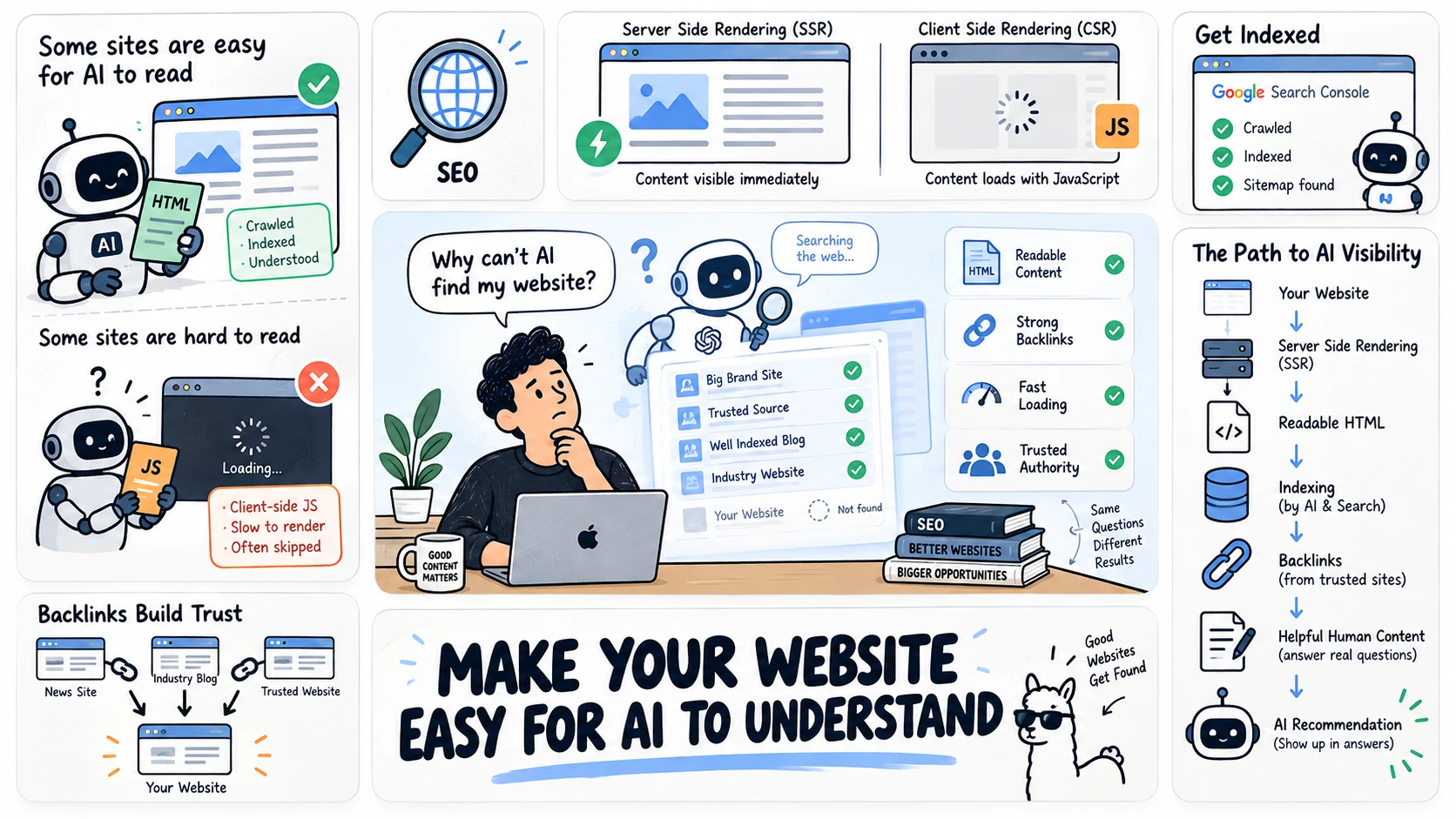
We once took on a Dubai based client who only wanted a landing page to establish an online presence. At the time, we needed the business, so we agreed. Looking back, that was the wrong call for them. A single landing page cannot show the full value of a service, and it does not perform well in Google or AI powered search rankings. If I could redo it, I'd have pushed them toward a full website from the start. Sometimes the smaller, faster option costs the client more in the long run.
Where AI is changing things right now
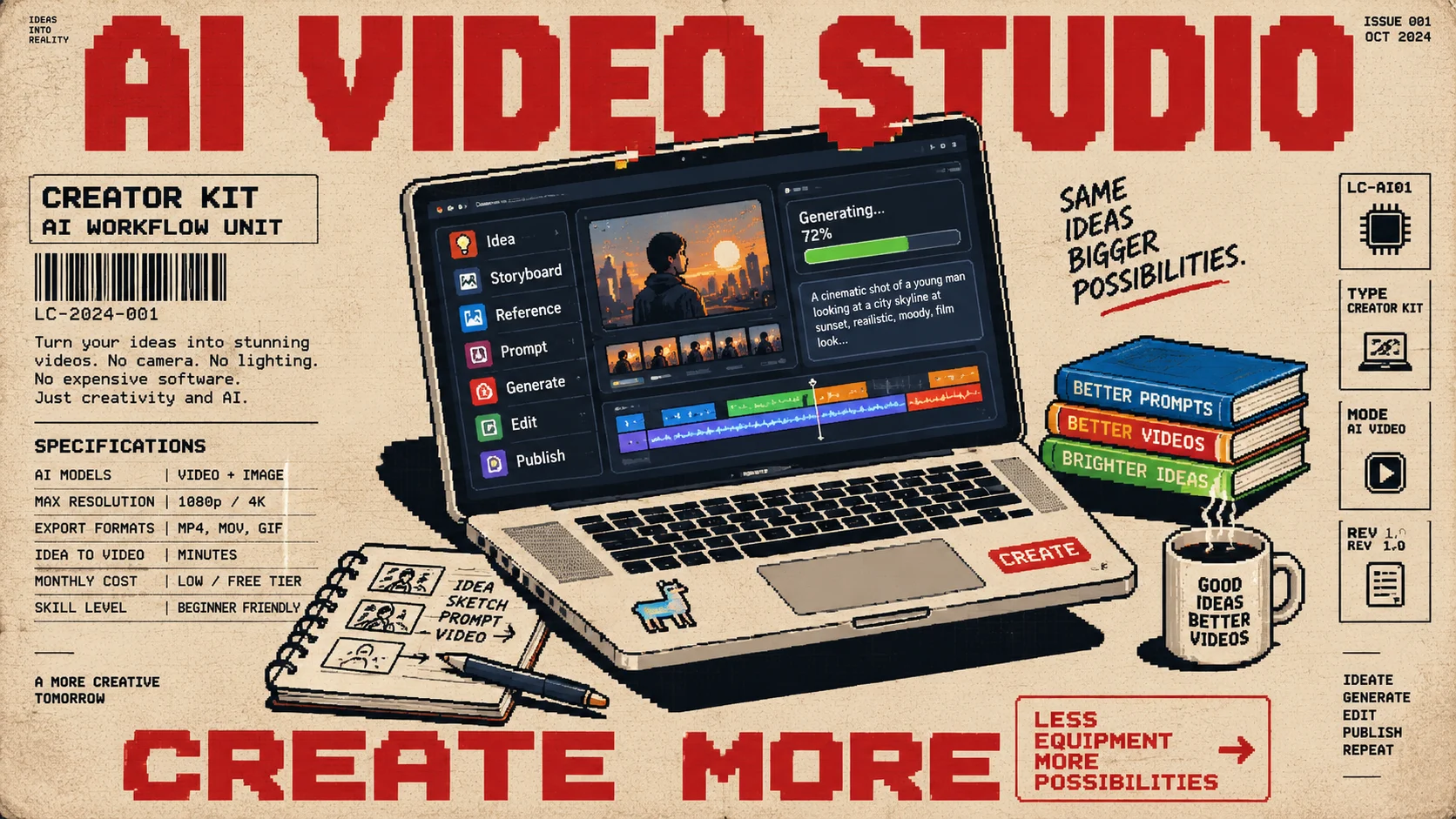
AI is reshaping both sides of this fast. On the content side, we're seeing creators build entire businesses around AI itself, using a single digital avatar instead of ever filming real video, and still reaching the right audience effectively. AI assisted writing helps too, though it still needs a human touch to feel genuine. On the product marketing side, there's a real danger emerging. Businesses using AI generated product images that look better than the actual product ever will in person. When a customer's real product doesn't match what they saw online, that gap becomes a trust problem, and it can genuinely damage the business.
The bottom line
If you're selling a service, start with content marketing to build trust before you ask anyone to buy anything. If you're selling a physical product, product marketing focused approaches with the right influencer or usage driven content tend to work faster. But in either case, be honest about your market size, be patient with content's slower timeline, and never let AI generated polish promise something your actual product or service cannot deliver.
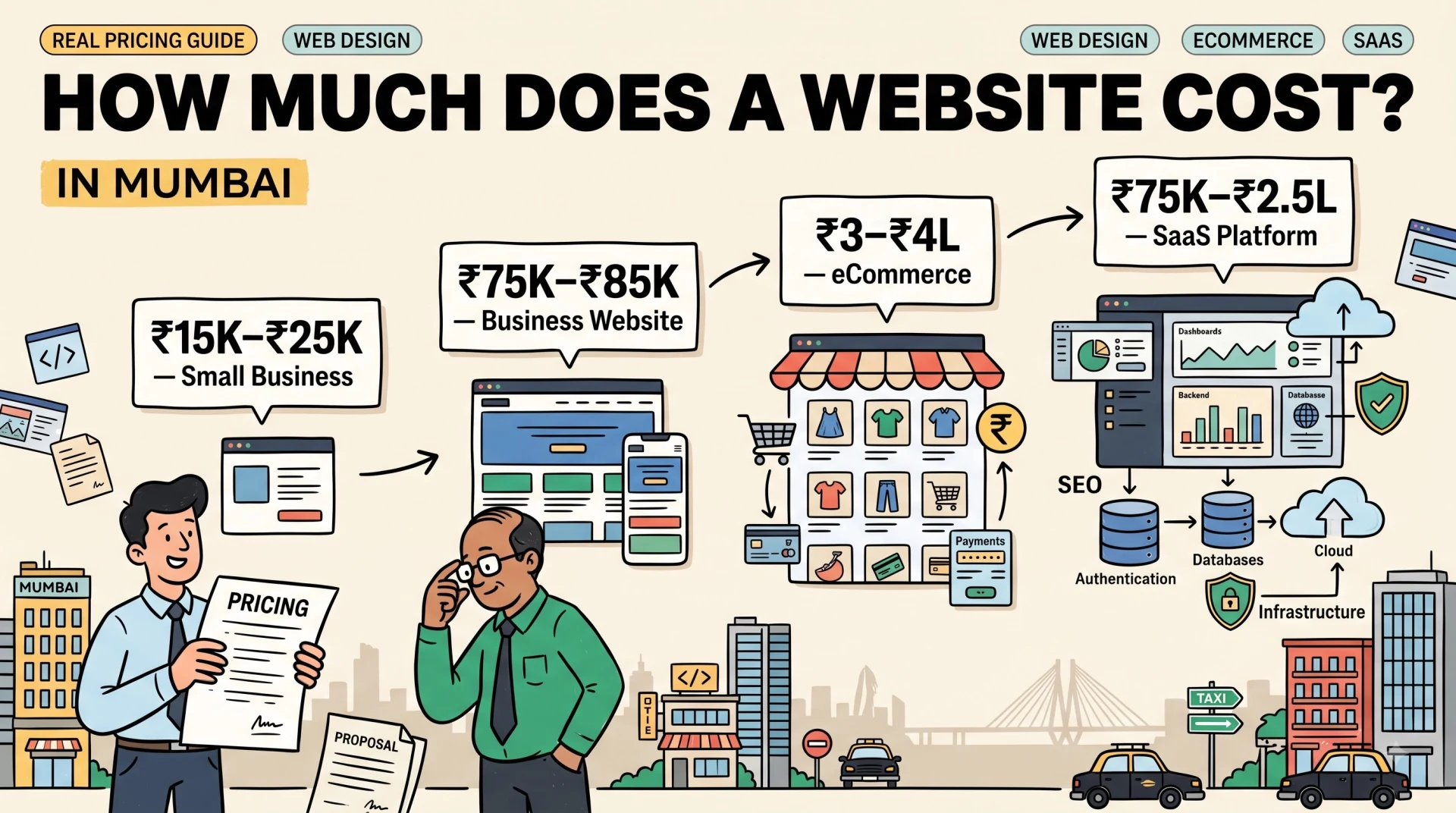
Also read : How Much Does It Cost to Build a Website in Mumbai?
 Start a project